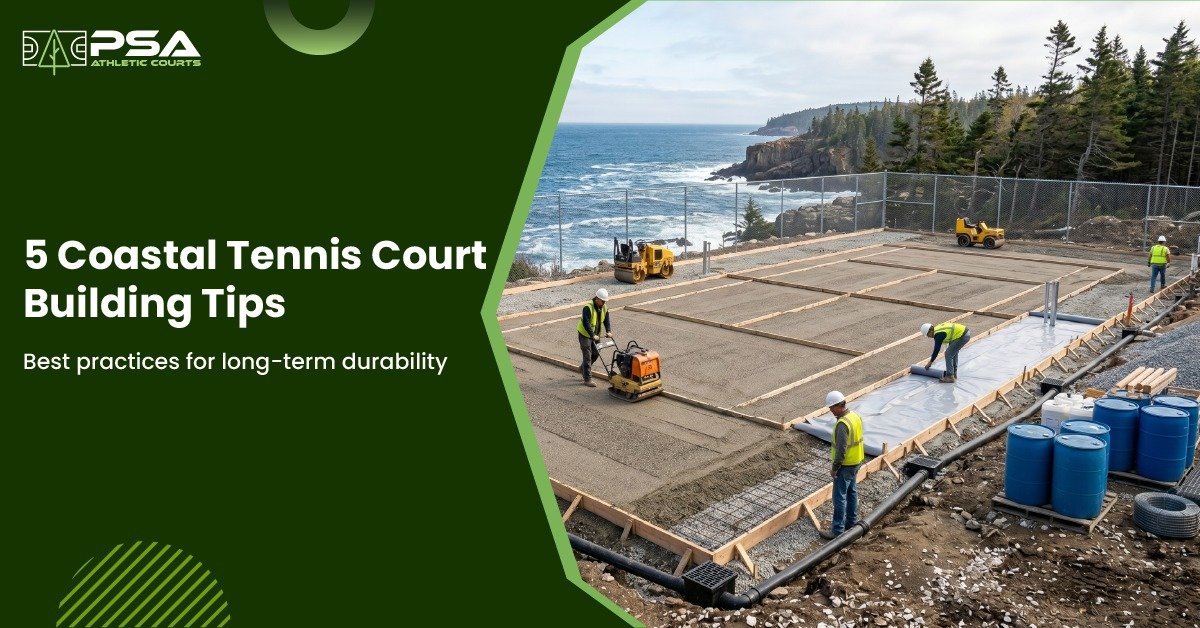
Building a tennis court in a coastal region requires a different level of planning compared to inland construction projects. Coastal environments expose courts to high humidity, salt air, heavy rainfall, strong winds, and fluctuating temperatures, all of which can shorten the lifespan of the surface if the court is not built correctly.
Whether the project is for a residential property, sports facility, school, or resort, successful tennis court construction in coastal areas depends on selecting the right materials, engineering proper drainage systems, and planning for long-term maintenance from the beginning.
Many property owners searching for a tennis court construction company focus only on the initial installation cost, but long-term durability is equally important in harsh coastal climates.
Below are five industry best practices professional builders use to ensure tennis courts remain durable, safe, and high-performing in coastal environments.
1. Prioritize Advanced Drainage and Water Management
Water management is one of the most critical factors in coastal court construction. Coastal areas often experience frequent rain, moisture-heavy air, and higher groundwater levels, which can weaken the court foundation over time.
Professional builders design drainage systems that include:
- Proper court slope for runoff
- Perimeter drainage channels
- Stable sub-base materials
- Moisture-resistant foundation layers
Without effective drainage, water can collect beneath the surface and cause:
- Structural cracks
- Surface bubbling
- Uneven ball bounce
- Premature deterioration
According to experienced court specialists such as Pine State Courts, poor drainage is one of the leading causes of long-term tennis court failure in coastal environments.
A professionally engineered drainage plan helps extend the lifespan of the court significantly while reducing maintenance costs.
2. Select Climate-Resistant Surface Materials
Not all court materials perform equally in coastal conditions.
Salt air and moisture exposure can accelerate wear on low-quality surfaces, making material selection essential for long-term durability.
Popular coastal-friendly surface systems include:
- Acrylic-coated asphalt systems
- Concrete courts with protective coatings
- UV-resistant acrylic finishes
- Cushioned acrylic surfaces for additional flexibility
These systems help resist:
- UV fading
- Surface cracking
- Salt-related corrosion
- Moisture penetration
Working with experienced tennis court designers ensures the surface material aligns with the local climate and expected court usage.
Property owners should also evaluate resurfacing cycles and maintenance requirements before selecting a surface system.
3. Reinforce the Base Structure for Long-Term Stability
The foundation beneath the court is just as important as the surface itself.
Coastal environments can experience:
- Soil movement
- Ground saturation
- Temperature-related expansion and contraction
To prevent structural issues, professional tennis court construction companies focus heavily on:
- Soil testing and stabilization
- Proper compaction techniques
- Reinforced aggregate base layers
- Stable sub-grade engineering
A weak base often results in recurring cracks that resurfacing alone cannot fix.
Professional contractors understand that investing more in the foundation stage reduces future repair and resurfacing costs significantly.
4. Plan Preventative Maintenance and Resurfacing Early
Coastal courts typically require more maintenance than inland courts because environmental exposure accelerates wear.
Regular maintenance should include:
- Surface cleaning
- Drainage inspections
- Crack monitoring
- Acrylic coating maintenance
- Scheduled resurfacing
Many property owners wait until visible damage becomes severe before taking action, but preventative care is far more cost-effective.
Understanding the warning signs through professional resources such as 7 signs tennis court resurfacing is needed helps property owners address issues before major structural repairs become necessary.
Reviewing professional guidance on tennis court resurfacing upgrades for school facilities also provides insights into long-term maintenance planning for high-traffic courts.
5. Hire Contractors with Coastal Construction Experience
Searching for tennis court construction near me may provide many local options, but not every contractor has experience building courts in coastal environments.
A qualified coastal tennis court builder should understand:
- Salt-air durability requirements
- Coastal drainage engineering
- Climate-adapted materials
- Long-term moisture management
- Wind and weather exposure considerations
Choosing contractors without coastal expertise can lead to:
- Premature cracking
- Surface instability
- Increased maintenance costs
- Reduced court lifespan
For property owners planning coastal tennis court projects, experienced teams like Pine State Courts provide climate-specific construction strategies designed to maximize durability and long-term performance.
Why Coastal Tennis Court Planning Matters
Coastal courts face significantly more environmental stress compared to inland facilities.
Without proper planning, common issues include:
- Surface fading
- Water pooling
- Structural cracking
- Coating failure
- Frequent resurfacing needs
Following proven industry best practices ensures:
- Better gameplay performance
- Lower long-term maintenance costs
- Improved structural durability
- Extended surface lifespan
Professional planning protects the investment and improves long-term ROI.
Final Thoughts
Building tennis courts in coastal areas requires more than standard construction techniques. Proper drainage systems, climate-resistant materials, reinforced foundations, preventative maintenance planning, and experienced contractors are all essential for long-term success.
By following these five industry best practices, property owners can create tennis courts that remain safe, visually appealing, and high-performing despite harsh coastal conditions.
With proper design and expert construction, a coastal tennis court can deliver years of reliable performance while minimizing maintenance and resurfacing costs.