Potty training is one of those parenting tasks that appears to be going well for many families, until poop becomes the problem. A toddler who cheerfully urinates in the potty may change on a dime and refuse to defecate there at all. If you’re on a search for how to get toddler to poop on potty, the most important thing is seeing this as one of those normal but misunderstood phases of your child’s development.
Using down to earth, nuts and bolts examples that many parents don’t get to hear (but truly need), this guide cogently explains the process in all its challenges staring you right in the face calmly and realistically.
Why Toddlers Hold Back Their Poop at the Potty
For a toddler, pooping is not the same as peeing. It requires extra work, extra body awareness, and extra trust.
From a toddler’s perspective:
- Poop has always happened in a diaper
- The diaper feels familiar and secure
- The potty feels open and unfamiliar
Most toddlers are anxious that they won’t have enough control or won’t know what’s coming. This fear often manifests itself as hiding, the body getting stiff, and not doing anything on the potty.
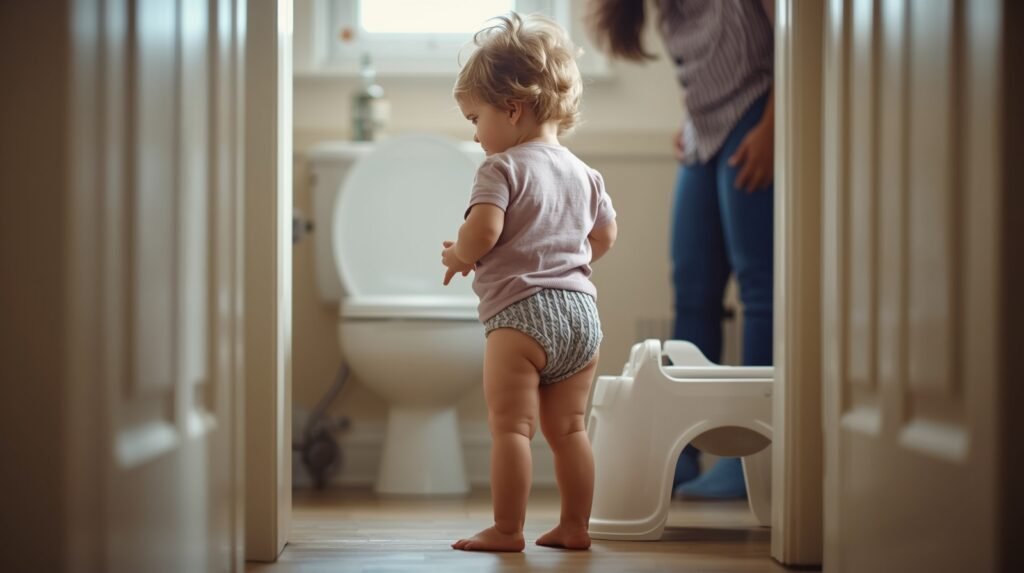
Knowing this emotional side is important when trying to learn how to get toddler to poop on potty without causing stress.
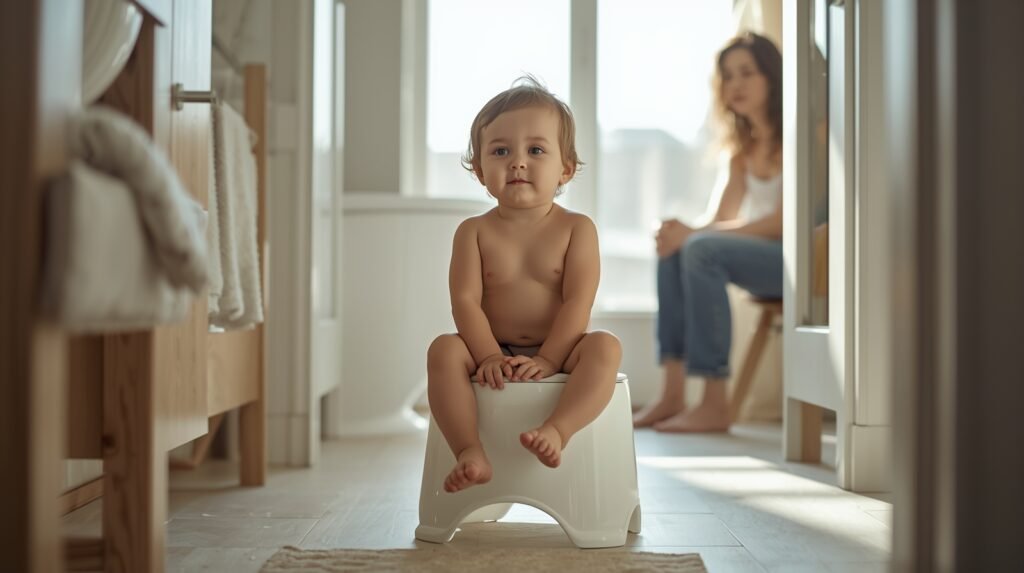
The Body Position Detail
One important factor that is rarely explained is body posture.
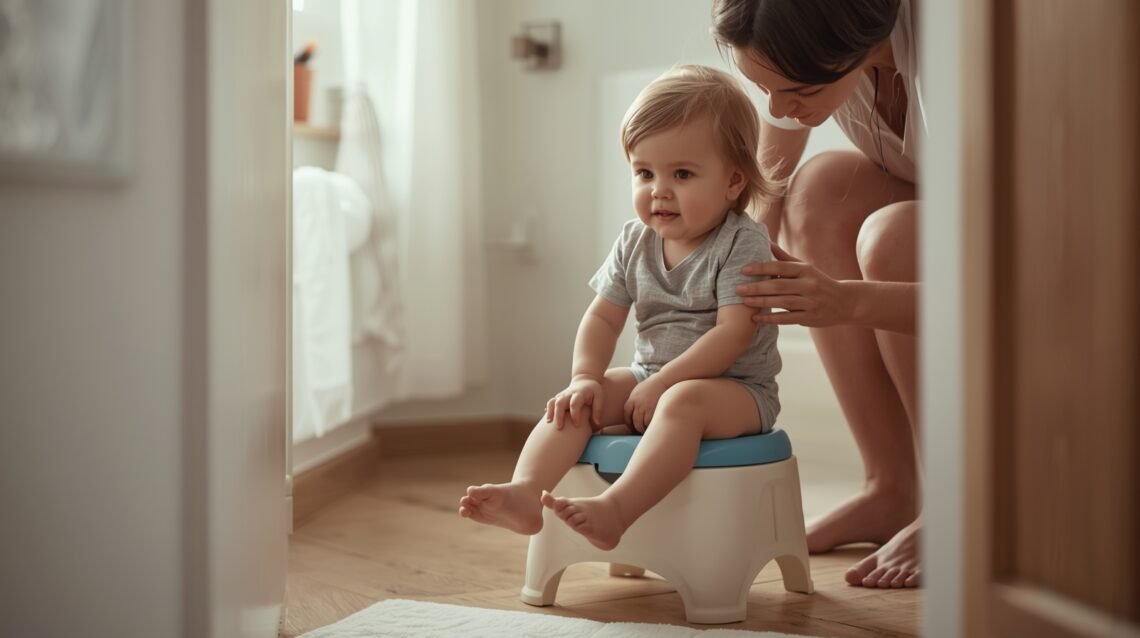
When toddlers sit on a potty with:
- Feet dangling
- Legs unsupported
- Back leaning backward
Their body naturally tightens. Wound up muscles make pooping more difficult and unpleasant.
Body can relax into a natural position when the feet are supported on a small stool.
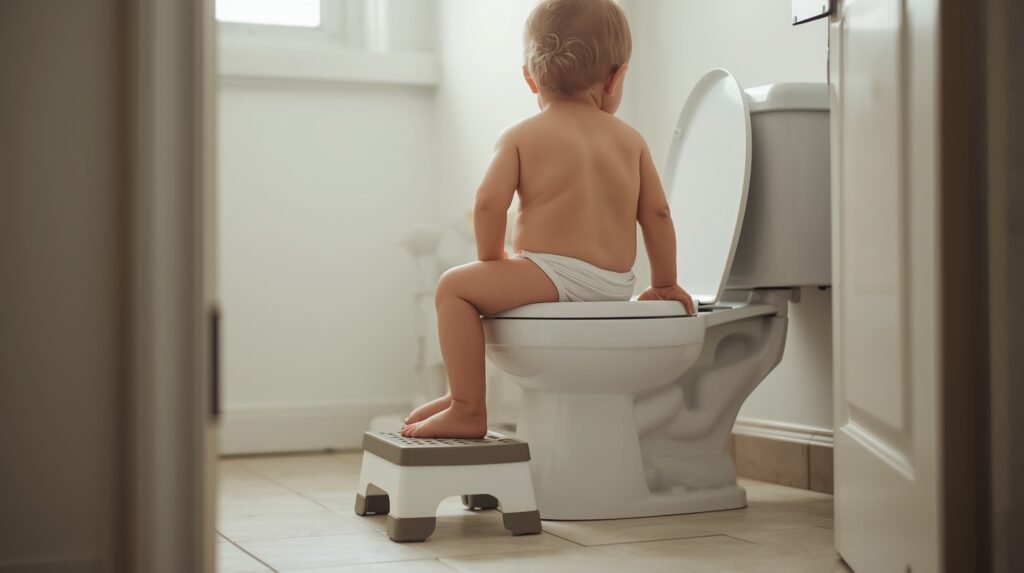
And when the body feels stable, fear often recedes without any need for it to be addressed.
This small physical adjustment can quietly unlock progress.
How to Get Toddler to Poop on Potty by Following Natural Timing
At least toddlers have predictable digestion rhythms, even though we as parents may not always observe them.
Most toddlers feel the urge to poop:
- Shortly after meals
- Often in the morning or early evening
- After movement or play
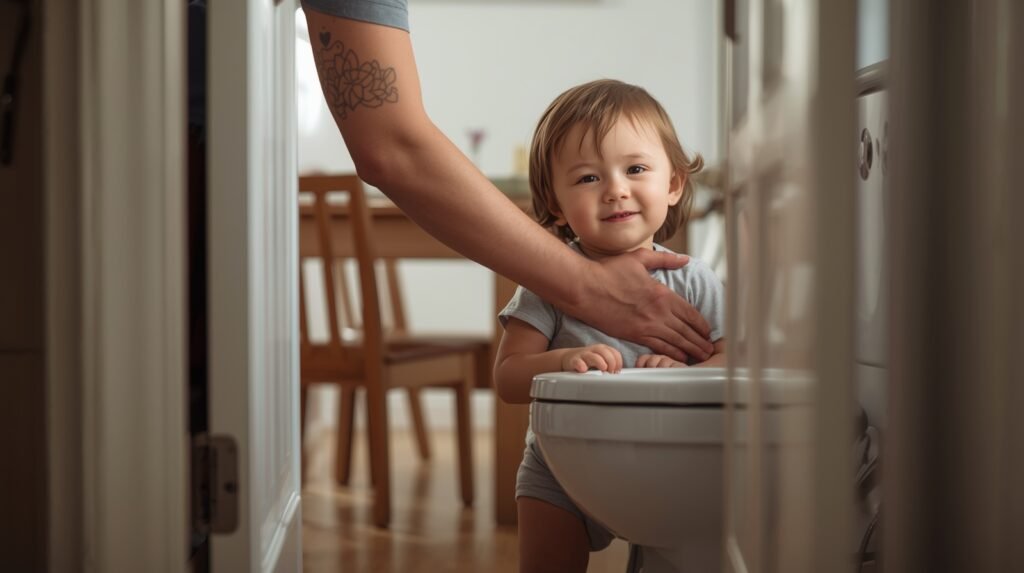
Instead of asking repeatedly throughout the day, guide your toddler to the potty during these natural windows. The body is already prepared, which reduces resistance and frustration.
This timing-based approach is one of the most effective ways to support how to get toddler to poop on potty successfully.
Use Calm Observation Instead of Questions
Questions can feel like pressure to a toddler.
Instead of:
- Do you need to poop?
- Do you want to try the potty?
Use simple observation:
- Your body looks ready to poop.
- I see you getting quiet. Let’s sit on the potty.
This removes the feeling of choice overload and keeps the moment calm and predictable.
When Privacy Can Matter More Than Public Praise
Toddlers often like to poop in private, even if they crave an audience at other times.
If your toddler:
- Turns away
- Asks you to leave
- Gets tense when watched
Respect that instinct. Stay nearby but give space.
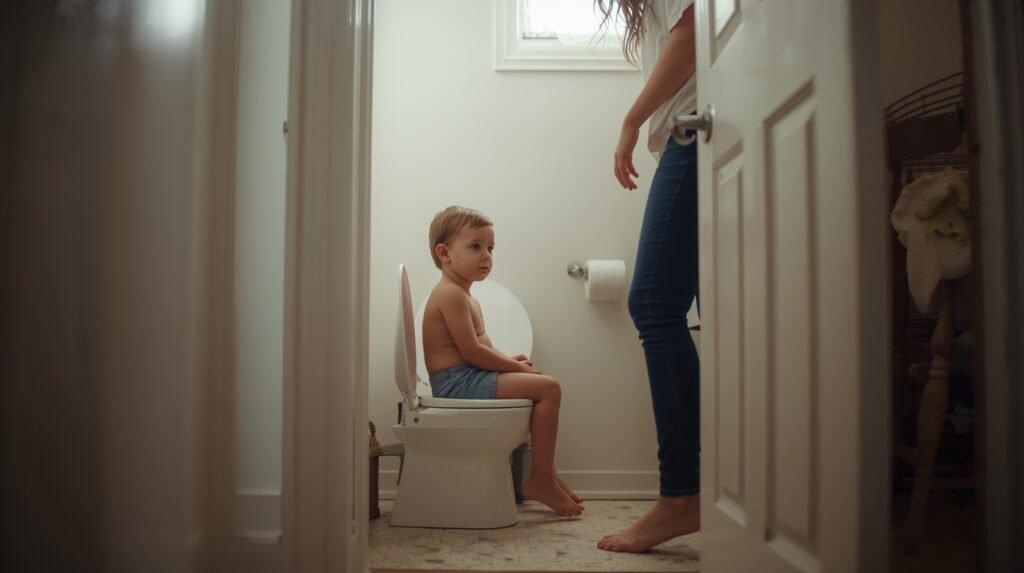
Appears that the modest wins build confidence even if confidence wouldn’t naturally be reinforced by failure. This one is a shocker for many parents, but it’s a BIG factor when trying to figure out how to get toddler to poop on potty with no setbacks.
Encouraging Poop Comfort Without Making Meals a Battle
When pooping feels hard or uncomfortable, toddlers naturally avoid the potty.
Instead, Jessi Haggerty, a registered dietitian nutritionist and certified intuitive eating counselor in Massachusetts, offers gentle habits instead:
- Offer water regularly
- Keep meals consistent
- Encourage relaxed bathroom time
Comfort leads to cooperation. People are less afraid when defecating feels easy.
What to Do If Your Toddler Only Poops in a Diaper
Some toddlers will refuse to leave a diaper behind when it comes to pooping, even as potty training gets underway. This is not a failure, it’s a transitional moment.
A gentle bridge method:
- Place your toddler on a potty to poop in the diaper
- Gradually loosen the diaper
- Remove it when your child feels ready
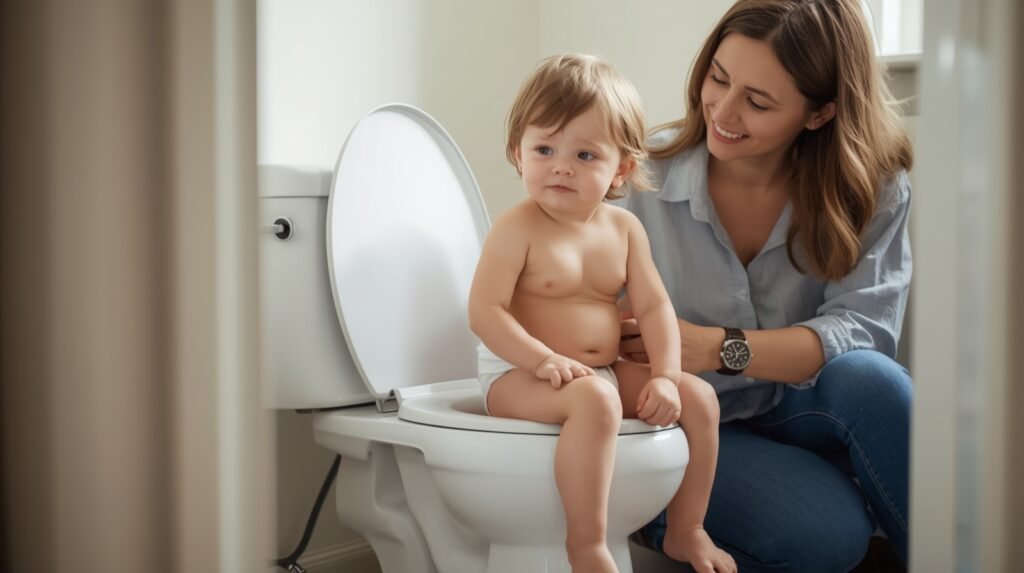
This approach respects emotional readiness while guiding progress naturally.
How to Respond to Accidents the Right Way
Accidents are part of learning.
When they happen:
- Stay calm
- Clean up without strong emotion
- Repeat, Poop goes in the potty. We’ll try again next time.
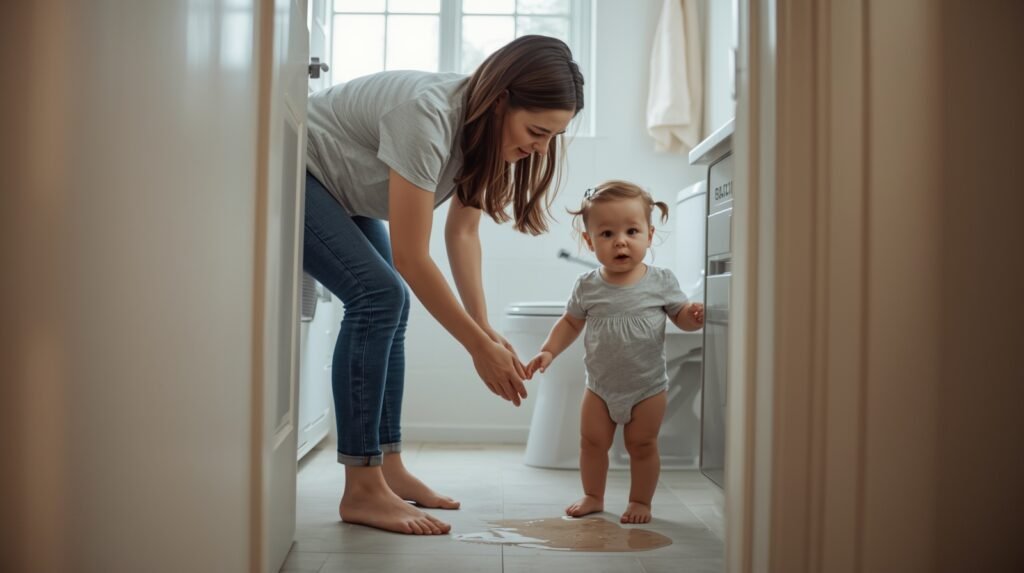
Gentle repetition shows toddlers what’s expected of them without warning.
When Taking a Break Is the Smartest Move
If your toddler looks extremely frightened, avoids pooping for a long time, or becomes very distressed, stop the process. For more early toddler development guidance and gentle parenting insights, parents can explore helpful resources on our homepage.
A small break can clear emotions and result in faster success afterward. Preparedness is always more important than haste.
Regular Questions that Parents Ask themselves
How long does it take a toddler to poop on the potty?
Every toddler is different. Some normalize in days; others take weeks. But forget timelines, this is really about staying consistent and being emotionally ready.
Is it normal for toddlers to fear pooping on the potty?
Yes. Fear is a very typical reaction, as pooping feels alien, not in a diaper. Often, with soothing reassurance, this fear diminishes.
Do I force my toddler to sit on the potty to poop?
No. Forcing often increases resistance. Gentle guidance during natural timing works better.
What if my toddler holds poop instead of using the potty?
Poop holding usually represents fear or discomfort. Emphasize body support, ritual, and calm reassurance.
Can taking a break help potty training for poop?
Yes. Short breaks often reduce pressure and allow readiness to develop naturally.
Final Thoughts
Our experience with how to get toddler to poop on potty is not focused on coercion or perfection. It’s safety, comfort, timing, and trust. The body becomes if it is supported and understood.
Progress takes place silently, but it is also enduring.