
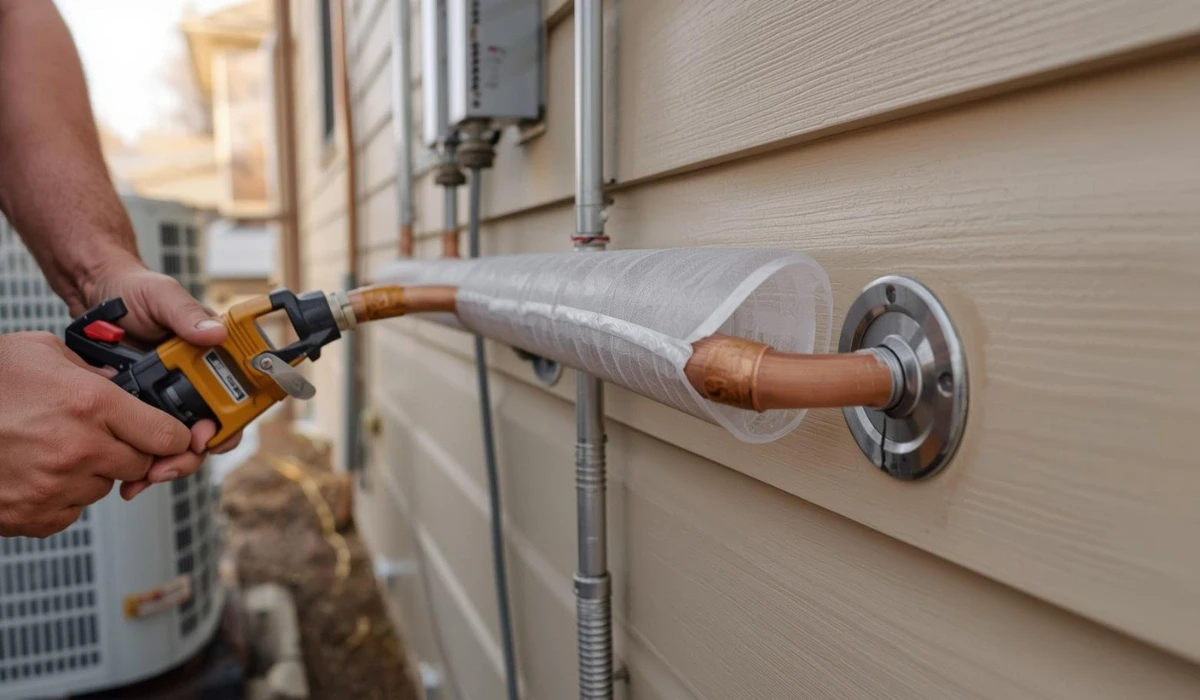
Multi-level homes often place extra demands on cooling systems because indoor units, outdoor condensers, ceilings, walls, and living areas may sit far apart. The route of refrigerant lines can affect how smoothly the system transfers heat from inside the home to the outdoor unit. AC line set routing helps reduce strain by keeping refrigerant travel organized, protected, and properly supported between levels. When the pathway is well planned, the system can cool rooms more evenly, avoid unnecessary pressure concerns, and be easier to service. Good routing supports comfort across floors instead of leaving performance to chance.
How Routing Supports Balance
- Cleaner Routes Help Refrigerant Move More Efficiently
In a multi-level home, the distance between the indoor air handler and outdoor condenser can be longer than in a single-level layout. If refrigerant lines take a confusing path through walls, attics, basements, or exterior chases, the system may work harder than needed to move refrigerant through the circuit. Careful routing creates a cleaner pathway with fewer unnecessary bends, tight turns, and long detours. This matters because refrigerant movement depends on proper line sizing, insulation, and a route that respects the equipment design. Well-planned AC Line Sets can help maintain smoother refrigerant flow between floors while reducing unwanted heat gain or loss along the way. Better routing also helps installers avoid placing lines near hot attic zones, sharp framing edges, or areas where vibration may become a problem. When the refrigerant path is direct and protected, the cooling system can respond more reliably during long periods of summer demand.
- Vertical Planning Reduces Pressure and Oil Return Problems
Multi-level homes often require refrigerant lines to run up or down between floors, so vertical planning matters. A poorly routed line may create problems with pressure balance, refrigerant movement, or oil return to the compressor. The compressor depends on proper oil circulation, and line paths with careless rises, dips, or unsupported sections can make that process less dependable. Routing decisions should consider how the line travels through chases, closets, mechanical rooms, garage walls, or exterior sections. A thoughtful path can help avoid excessive elevation changes and prevent low spots where oil may collect. It can also reduce strain from long vertical runs that exceed the equipment’s allowed limits. In homes with cooling zones on upper floors, this planning becomes even more important because heat naturally rises and upper rooms often need steady cooling. When the route is designed with vertical movement in mind, the system is more likely to cool every level without placing extra stress on key components.
- Protected Routing Prevents Hidden Wear and Damage
Refrigerant lines often pass through hidden areas, and in multi-level homes those paths can be more complex. Lines may travel through framing cavities, attic spaces, crawl areas, soffits, or exterior walls before reaching the outdoor unit. If they are not protected, they can be damaged by nails, sharp metal edges, rodents, vibration, or future renovation work. Good routing improves performance by reducing the chance of leaks, crushed insulation, or contact with surfaces that create noise. It also keeps the line set away from areas where high heat or moisture may weaken insulation over time. In attics, heat exposure can affect refrigerant lines if insulation is damaged or poorly fitted. In wall cavities, tight bends can reduce long-term reliability and make service harder. Proper routing includes support points, sleeve protection where needed, sealed wall penetrations, and continuous insulation along the run. This protects the cooling process and helps the system maintain steadier performance across multiple levels.
- Better Placement Makes Service and Cooling Balance Easier
Routing is not only about installation; it also affects how easily the system can be serviced later. In a multi-level home, hidden or poorly placed refrigerant lines can make it harder to inspect insulation, check for leaks, replace sections, or upgrade equipment. A planned route can place access points in logical areas, such as mechanical rooms, utility spaces, basements, or exterior walls, instead of trapping important connections behind finished surfaces. This can reduce disruption during maintenance and help technicians diagnose performance issues more quickly. Better placement also supports even cooling because the system can operate closer to its intended design when line runs are not stretched, exposed, or restricted. It works alongside duct design, airflow balance, thermostat placement, and attic insulation. In a busy household, bedrooms, living rooms, and work areas may all need steady comfort at different times, so a strong refrigerant pathway helps support the entire home.
Stronger Cooling from Better Planning
AC line set routing helps improve performance in multi-level homes by providing the refrigerant with a cleaner, safer, and more efficient path between indoor and outdoor equipment. Good routing can reduce unnecessary bends, protect lines from heat and damage, support oil return, and make future service easier. It also helps the cooling system work more consistently across upper and lower floors. For homes with long runs, hidden wall paths, or several cooling zones, careful planning can make a noticeable difference. When the route is handled thoughtfully, the air conditioning system is better prepared to support comfort throughout the whole home.