
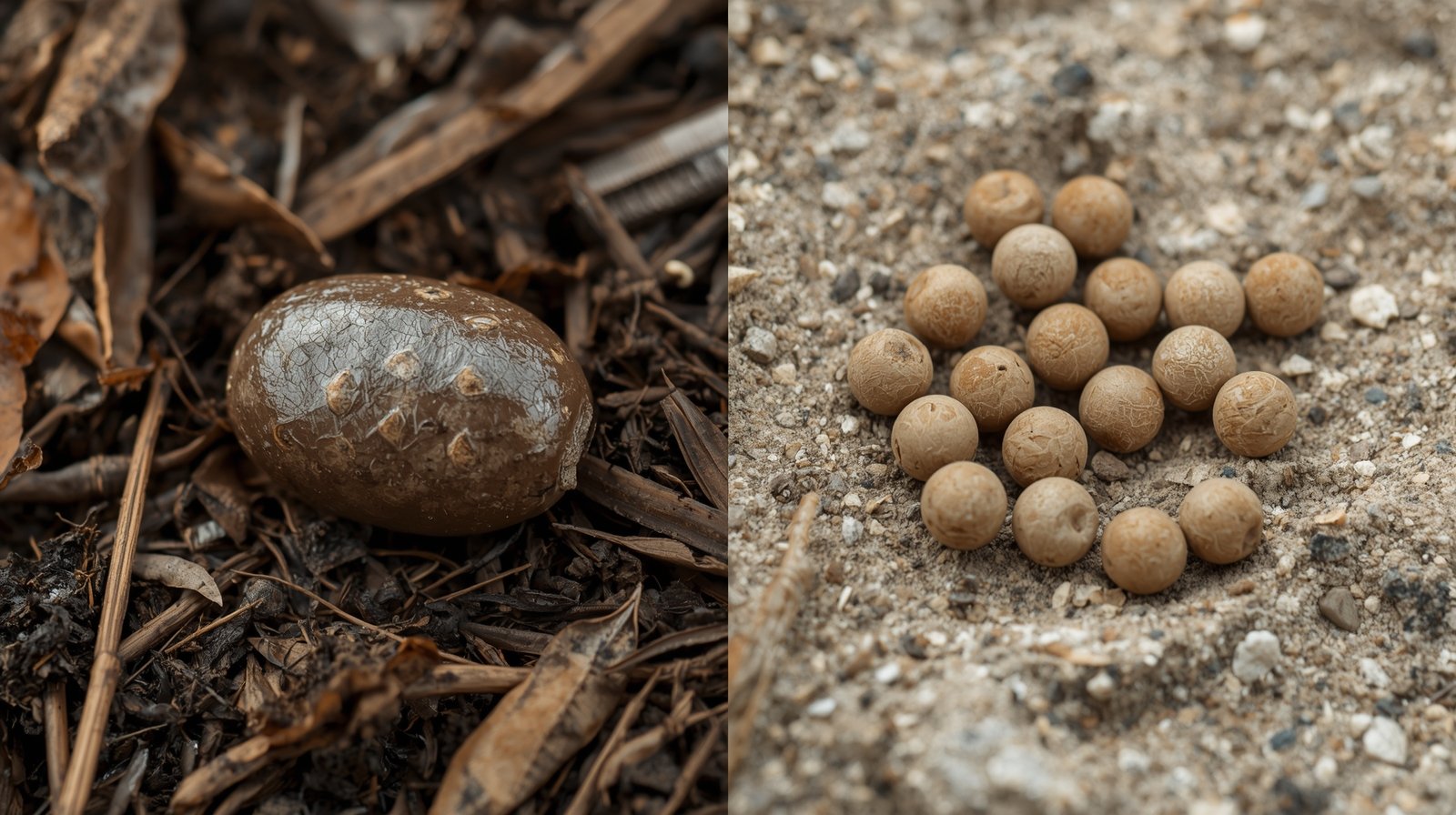
Come on, if you’ve ever strolled through your backyard, garden, or a wooded path and spotted those little brown pellets, you’ve wondered: Deer poop vs rabbit poop? On the surface, these droppings may appear close but are deceivingly similar. But where size, shape, and texture are carefully noted along with arrangement, habitat , and seasonal diet of the animal, you can be sure to separate them.
This guide offers tips for field readiness, as well as descriptions of various scientific principles and practical observation techniques. By the end, you’ll be able to identify pellets like a wildlife expert and understand why they look the way they do, especially when using detailed wildlife identification guides.
Why Correct Identification Matters
Being able to tell which animal left the droppings has practical and ecological applications:
- Gardening: Find out who is likely to nibble your plants.
- Wildlife scouting: Identifies which animals visit your property or a trail.
- Learning: Offers lessons about what animals do, eat, and when they are active.
- Conservation and ecology: Helps track local animal numbers and study what they’re eating.
Size: The First Clue
Pellet size is often the most immediate clue.
| Animal | Pellet Size | Metric |
| Deer | ½ – ¾ inch long | 1.3 – 2 cm |
| Rabbit | ¼ – ⅜ inch diameter | 0.6 – 1 cm |
Tips for field measurement:
- Include a small ruler or coin for scale in photos.
- Take multiple pellets to compare average size.
Detail: Bigger, ovals pellets signify deer and the small, spheres means rabbits.
Shape: Oval vs Perfect Sphere
- Deer: Somewhat oblong or cylindrical; some pellets have one end tapered.
- Rabbit (solid shapes, almost perfect spheres; very uniform in size.
Field tip: Put two pellets side-by-side. The slightly elongated or elongate shape is almost invariably a sign of a deer.
3. Surface Texture & Composition
- Deer: Smooth, hard, occasionally with a shine when fresh. Homogenous intestinal content is the result of ruminant digestion.
- Rabbit – The surface is rougher, and you can see plant fibers. A coarser internal arrangement since rabbits digest through hindgut fermentation.
An observation tip: Get up close with a magnifying glass. Rabbit pellets often contain fibrous particles, while they are rarely observed in deer.
Fresh vs Aged Droppings
Droppings age with moisture and exposure:
Fresh pellets:
- Dark brown to black
- Firm, sometimes slightly shiny
- Retain shape
Aged pellets:
- Light brown or gray
- Dry, crumbly, may fragment
- Color alone is never enough to go on; always check the texture as well as size.
Example: If pellets are washed out and crumbly in mid-summer, the season of drying, not the animal type, may be the cause.
Arrangement Patterns: Scattered vs Clustered
- Deer: Individual piles, usually in open or on paths.
- Rabbit: Clumps are usually around food or burrows.
Tip: Watch for several visits — rabbits tend to go in the same spot, making small “pellet gardens.”
Habitat & Location Clues
Where you find droppings offers key identification hints:
Deer locations:
- Forest edges and field margins
- Trails they use repeatedly
- Open lawns adjacent to woods
Rabbit locations:
- Dense vegetation or garden edges
- Nest: In burrows under sheds, brush piles or low shrubbery
- Close to vegetation on which they feed, usually near ground
Example: Small, round pellets by your garden fence = probably rabbit. Bigger, oval pellets next to woodland edge = probably deer.
Seasonal Influences on Pellet Appearance
Deer:
- Spring/Summer: Soften; may occasionally slumps in lush greens.
- Fall/Winter: Harder, drier, sharper (twig and bark diet).
Rabbit:
- Less variation across seasons. Pellets remain mostly uniform.
- Color may darken slightly in winter with different forage.
Field insight: Seasonal diet affects moisture and pellet cohesion — consider when identifying.
Digestive Biology & Why Pellets Differ
Understanding digestion explains why deer poop vs rabbit poop differs:
Deer (Ruminants):
- Four-chambered stomach, chew cud
- Digest fibrous plants thoroughly
- Produce compact, uniform pellets
Rabbits (Hindgut Fermenters):
- Digest via cecum, producing hard pellets + soft cecotropes
- Hard pellets contain visible plant fibers
- Cecotropes are re-ingested for nutrients (you rarely see these)
Practical observation: Fibrous or uneven pellets = rabbit; smooth, compact = deer.
Tracks & Associated Signs
Often, droppings are accompanied by other animal indicators:
Deer:
- Hoof prints in mud or snow
- Browse marks on shrubs and saplings
- Occasional rubs on tree trunks
Rabbits:
- Small footprints (four toes front, four back, clustered)
- Nibbled plant stems near ground
- Visible burrow entrances
Field tip: Cross-reference tracks and chew patterns for accurate identification.
Advanced Field Techniques
- Photography tips: Place a ruler or coin near pellets for scale. Use macro setting for fiber details.
- Measurement method: Mean few pellets to evade outlier clusters
- Timing: Morning and following rain has higher possibility of noticing fresh pellets.
- Several signs: Always use size, shape, texture, pattern, location, and tracks.
Example: Small round pellets, clustered around a garden, and tiny chew marks on lettuce leaves are definite rabbit activity.
Mistakes to Avoid
- Identification by color alone: Not dependable; we need to look at size and shape.
- Ignoring habitat clues: Pellets alone may mislead.
- Assuming old pellets = type: Aging changes color and texture.
- Relying on single pellet: Observe multiple for average size and pattern.
Health & Safety Tips
Even if droppings appear harmless:
- Wear gloves
- Use tools (spade, stick)
- Wash hands thoroughly afterward
- Avoid direct contact with pets
Reason: Both deer and rabbit feces can contain bacteria or parasites.
Quick Comparison Table
| Feature | Deer | Rabbit |
| Size | ½ – ¾ inch (1.3–2 cm) | ¼ – ⅜ inch (0.6–1 cm) |
| Shape | Oval, slightly tapered | Spherical, uniform |
| Surface | Smooth, firm | Rough, fibrous |
| Arrangement | Scattered piles | Dense clusters |
| Location | Trails, edges of forests | Near burrows, garden edges |
| Seasonal | Soft/clumped in summer; firm in winter | Consistent |
| Digestive system | Ruminant | Hindgut fermentation |
| Signs | Hoof prints, browse | Small tracks, nibbled stems |
Real-Life Observation Examples
- Backyard Scenario: Oval, ¾ inch pellets scattered along a fence line in November. Adjacent tree saplings show browse marks → deer.
- Garden Scenario: Tiny round pellets, dense cluster near raised vegetable beds, lettuce nibbled → rabbit.
- Trail Setting: Pellet mix of age on trail, some pellets clumped due to spring rain → deer, seasonnal moistures makes it clump.
Conclusion
The difference between deer poop vs rabbit poop might sound nuanced, but when you put size, shape, texture, arrangement, habitat, digestion, track,s and multi-field observations together, it’s a piece of cake to identify the two.
This guide offers practical field tips, scientific context,t and observation strategies, so you’ll no longer guess each pellet tells a story. For broader wildlife sign insights and community‑verified examples, see the wildlife sign identification community for additional references.



One response to “Deer Poop vs Rabbit Poop: 7 Best Crucial Clues”
[…] Digestive enzymes for plant fiber processing are now active at higher levels. Stool shape also becomes more defined a subtle but real biological marker,especially when comparing rabbit pellet structure differences. […]